A recipe from Gemo
Napa Cabbage Kimchi

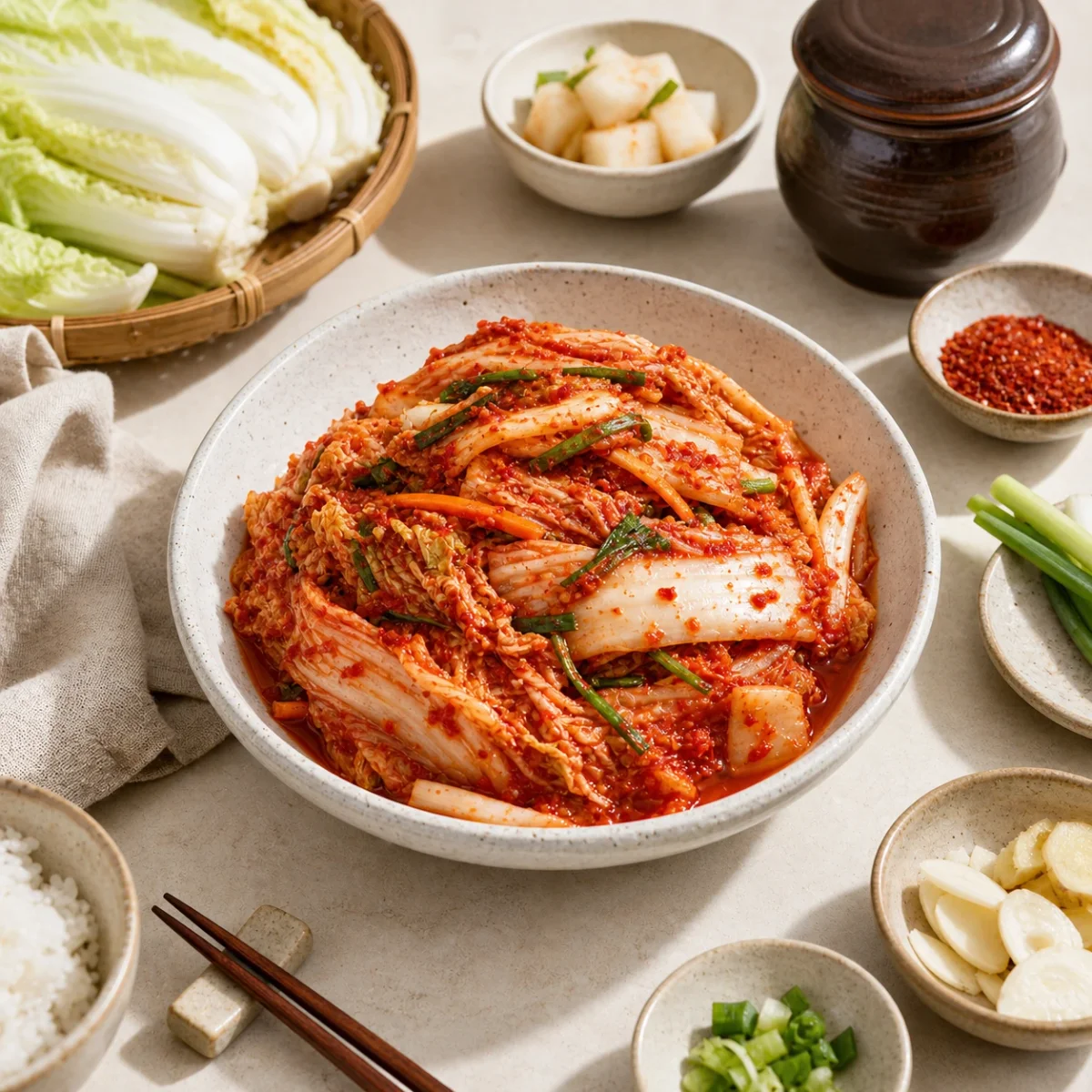
A classic Korean fermented side dish made with salted napa cabbage, gochugaru, garlic, ginger, fish sauce, radish, and scallions, then briefly fermented until tangy and lightly fizzy.


Method
- 01
Put 1.2 kg cut napa cabbage in a large clean bowl and sprinkle 80 g coarse salt between the thicker stem pieces as you toss. Let it stand until the stems bend without snapping and the cabbage has released liquid, turning the bowl once or twice so it salts evenly.
⏱ 90 min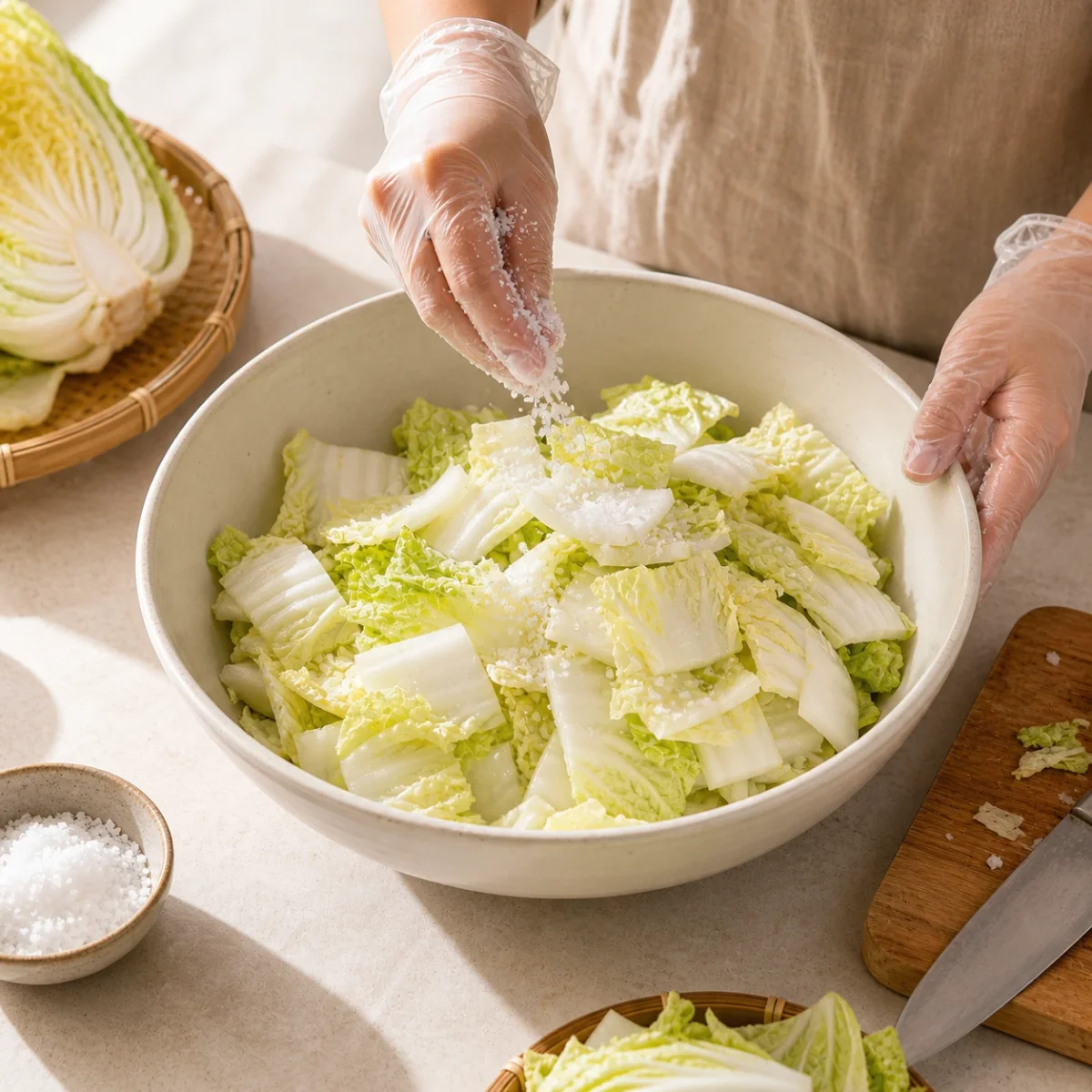
- 02
Rinse the salted cabbage in two or three changes of cool water, then drain well in a colander. Taste a thick stem piece: it should be seasoned but not sharply salty. Drain until excess water no longer pools in the bowl.
⏱ 20 min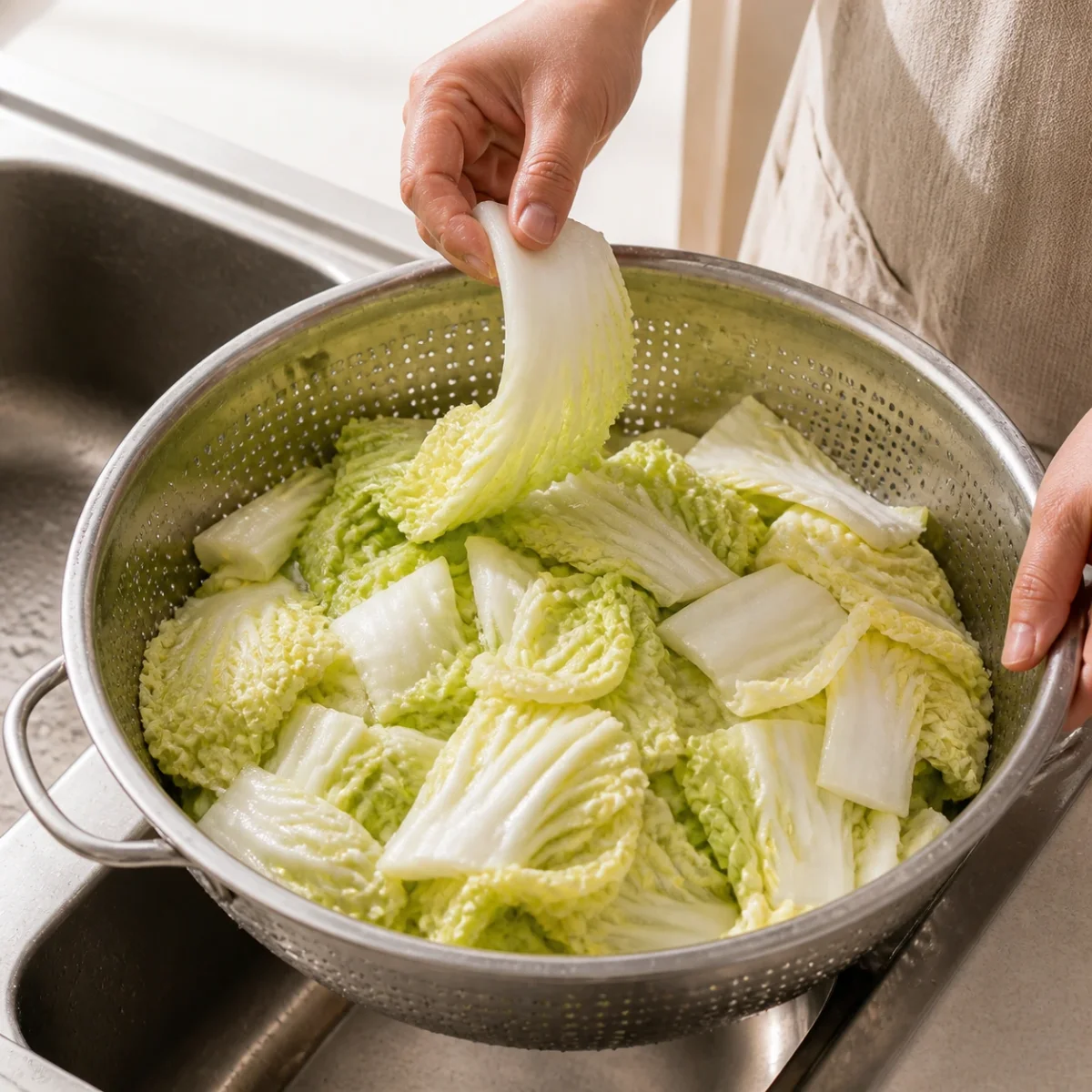
- 03
Whisk 180 ml water and 1 tablespoon sweet rice flour in a small saucepan. Cook over medium heat, stirring constantly, until lightly thick and glossy, then stir in 1 teaspoon sugar and let the paste cool to room temperature.
⏱ 5 min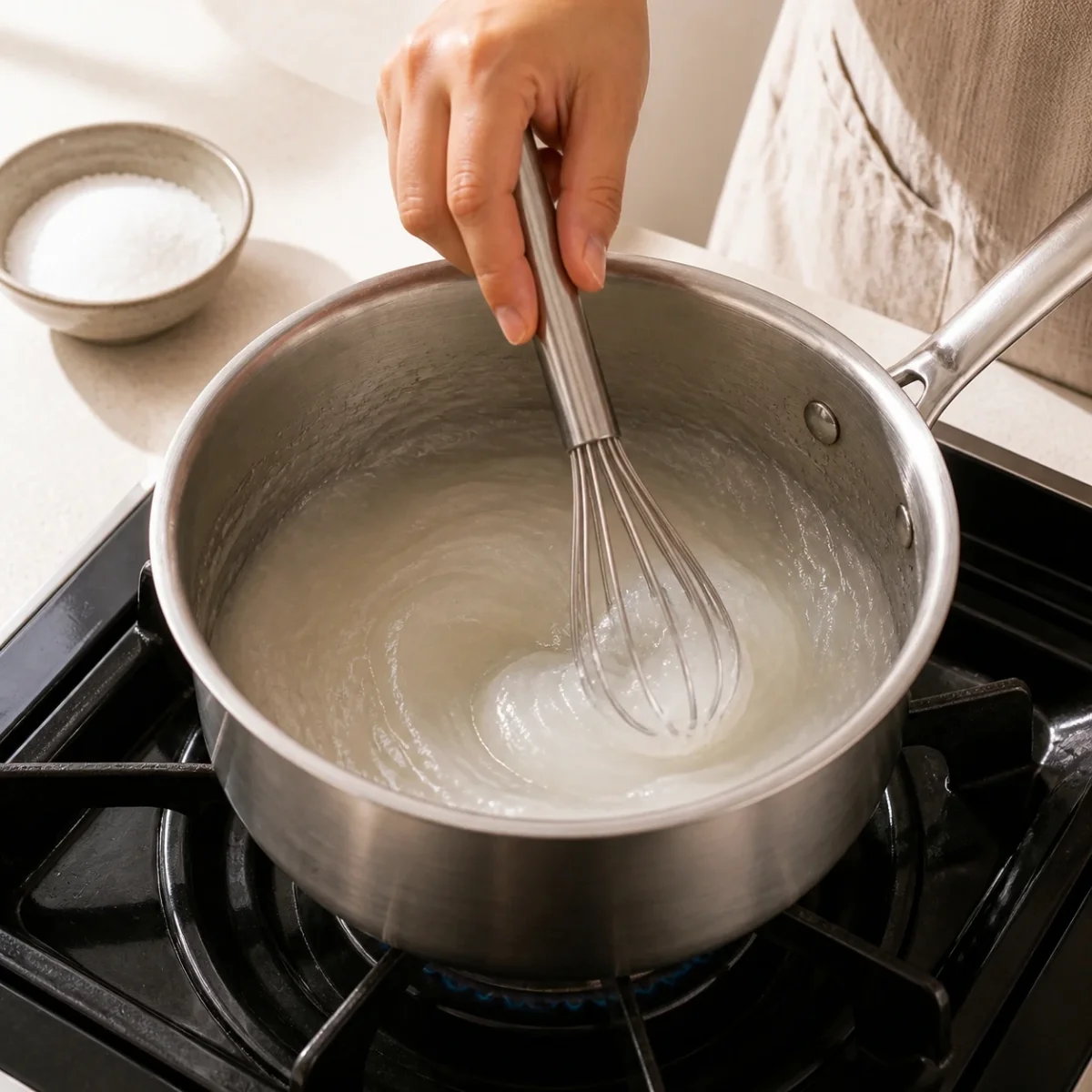
- 04
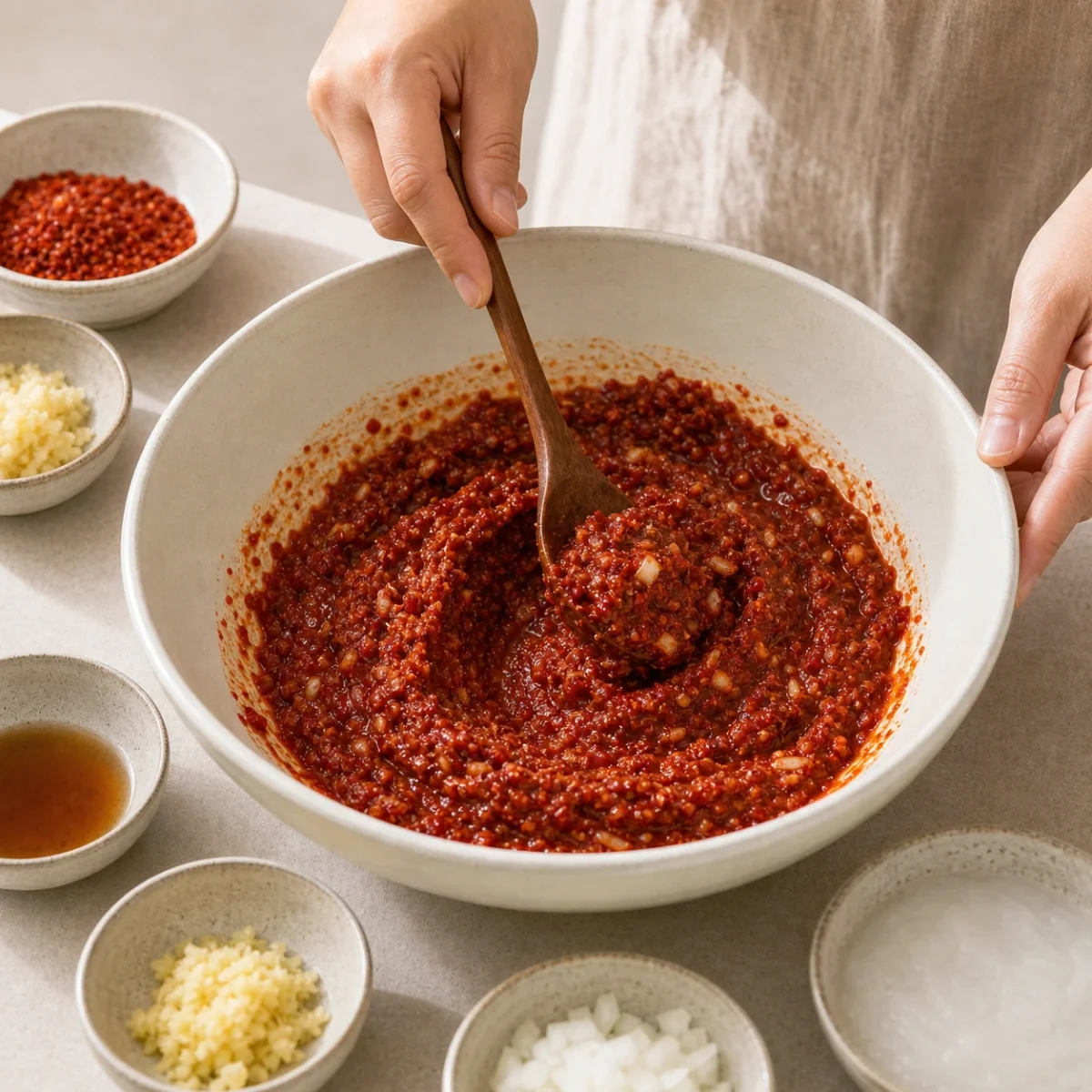
In a large bowl, mix the cooled rice paste with 60 g gochugaru, 45 ml fish sauce, 6 garlic cloves, 20 g ginger, and 100 g onion. Let the seasoning stand for a few minutes so the chili flakes hydrate into a loose red paste.
- 05
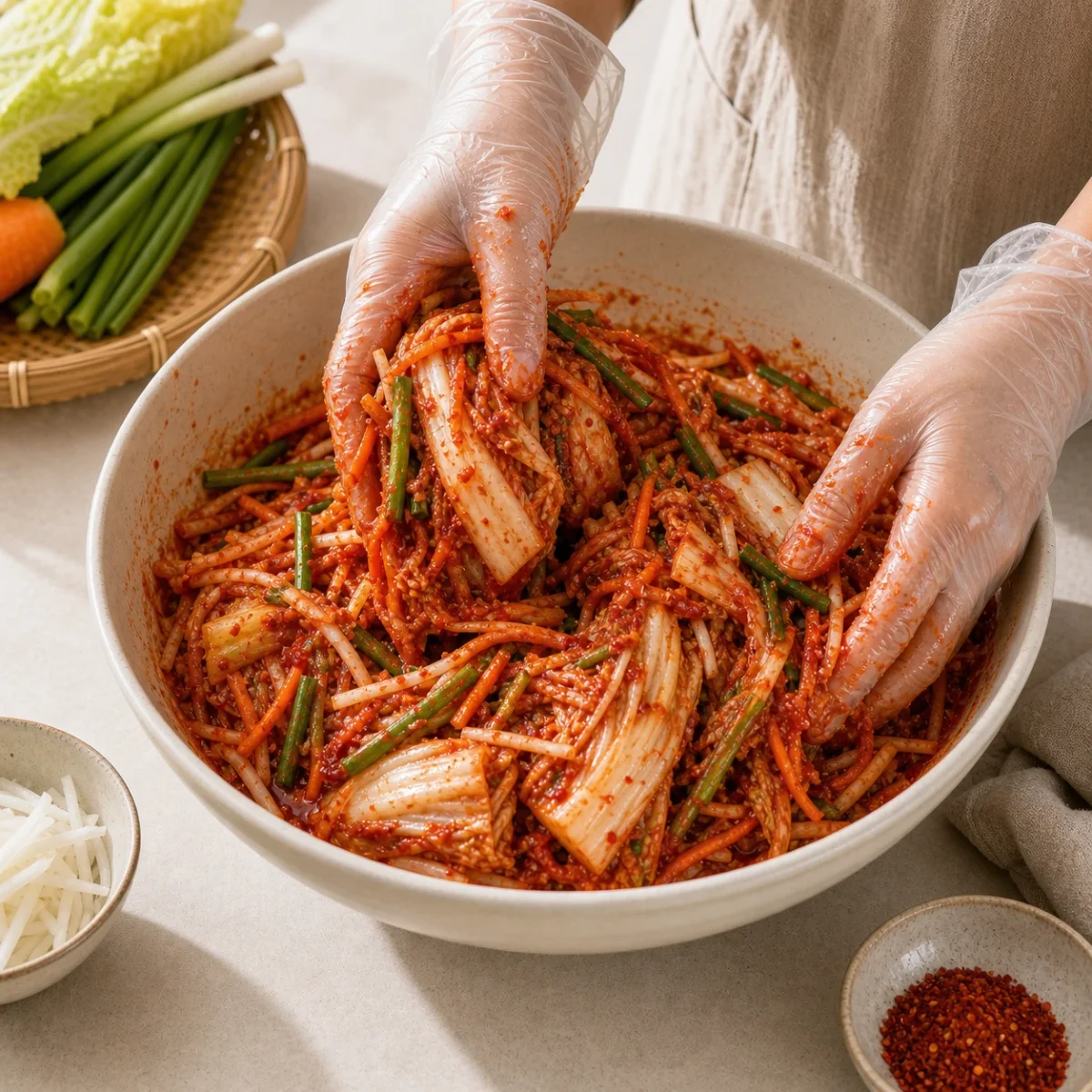
Add 200 g radish, 80 g carrot, and 4 scallions to the seasoning paste, then fold in the drained cabbage. Wearing food-safe gloves if possible, massage gently until every piece is coated and the vegetables are evenly distributed.
- 06
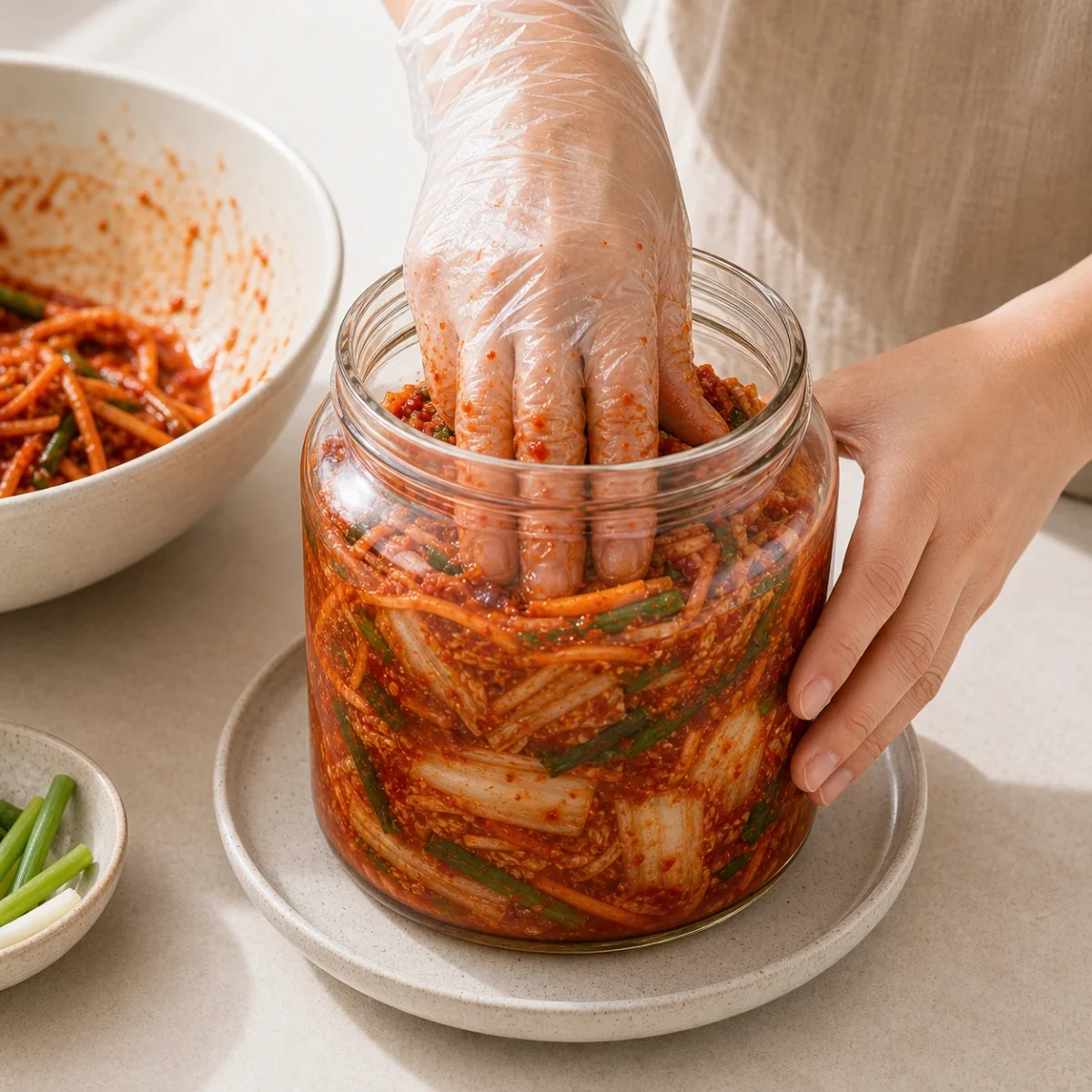
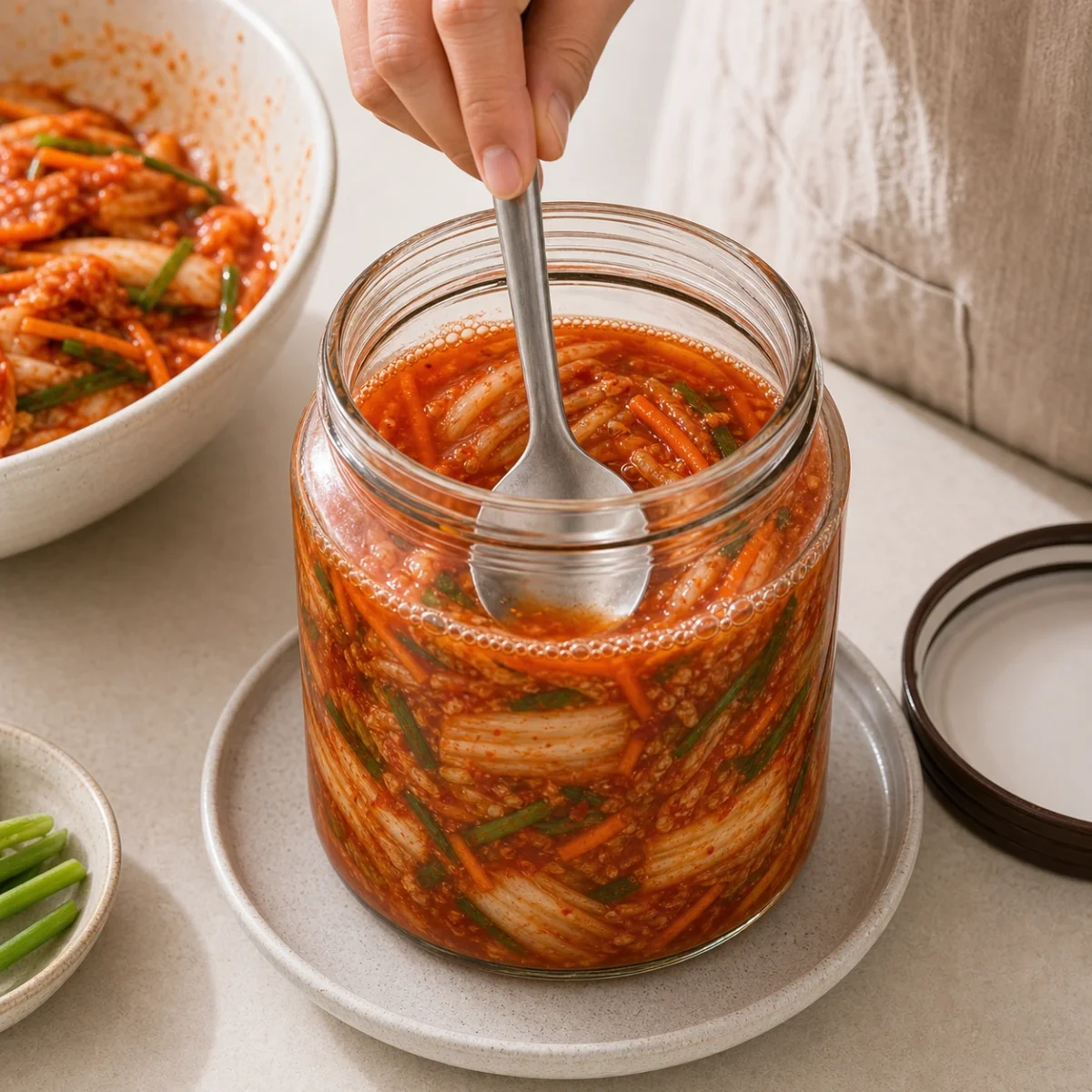
Pack the kimchi into a very clean food-grade jar or container, pressing down firmly to remove air pockets and bring some brine to the surface. Leave 2-3 cm of headspace, cover, and set the container on a plate in case it bubbles over.
- 07
Ferment at cool room temperature, ideally about 18-22C, for 24-48 hours. Open or loosen the lid once a day if the container is tight, press the kimchi below its brine with a clean spoon, and look for small bubbles and a lightly sour aroma. In a hot kitchen, move it to the refrigerator sooner.
- 08
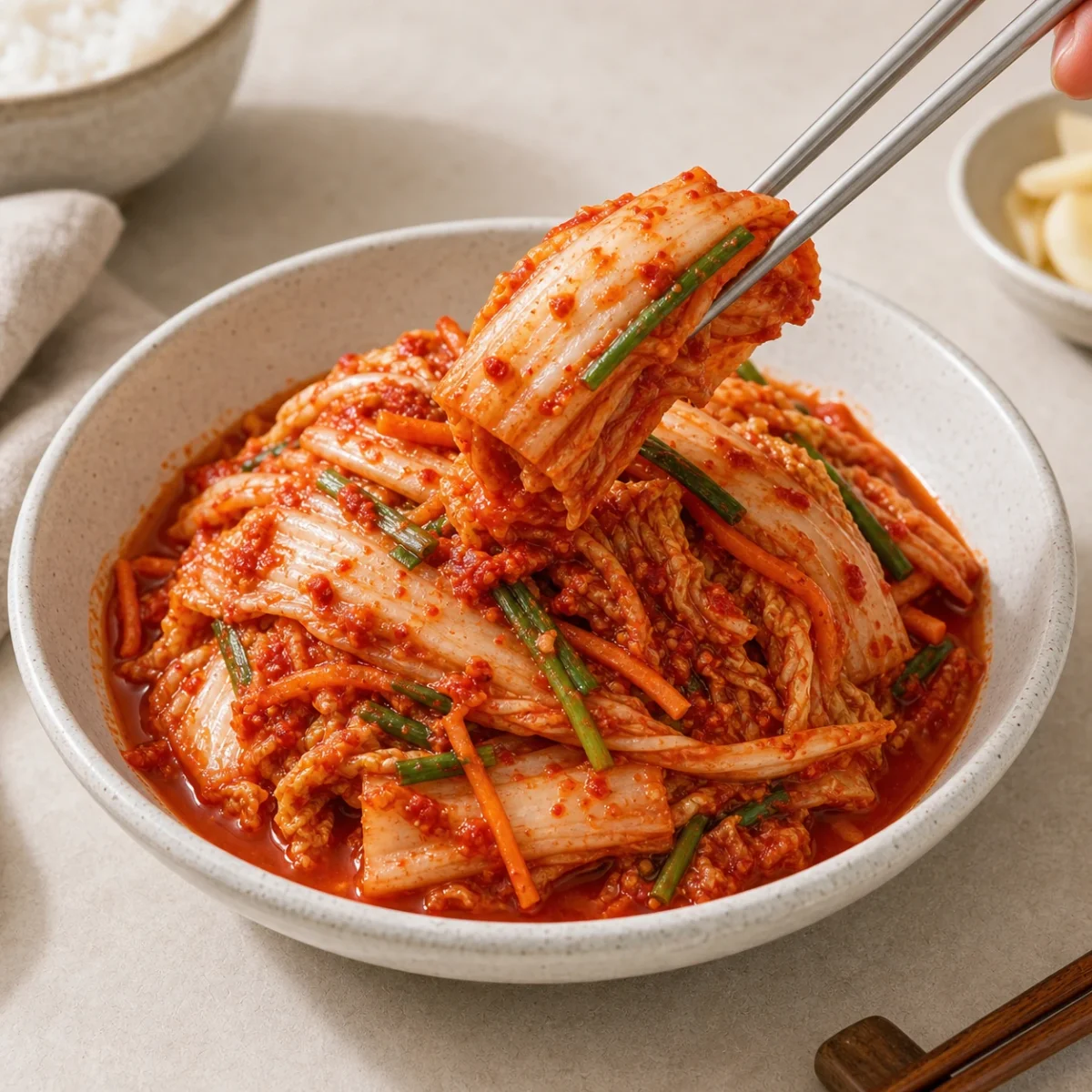
Refrigerate the kimchi once it tastes pleasantly tangy. It can be eaten right away as banchan, but the flavor rounds out after another 2-3 days in the refrigerator. Always use a clean utensil and keep the vegetables covered with their brine.
Nutrition